HOA Pressure Washing Services That Protect Value
- Jetty

- 7 days ago
- 5 min read
A clean community does more than look well managed. It signals that the association is protecting shared property, responding to maintenance needs, and setting a standard residents can see every day. HOA pressure washing services are one of the most visible ways to maintain that standard across entrances, sidewalks, amenity areas, drive lanes, walls, and common buildings.
In Northeast Florida, exterior surfaces face a demanding cycle of humidity, rain, heat, shade, and airborne debris. Green and black organic growth can return quickly on concrete, pavers, stucco, and fencing. The right maintenance plan removes the buildup without treating every surface the same way, helping the community stay clean, safe, and ready for residents, guests, and prospective buyers.
Why HOA Pressure Washing Services Matter
For an HOA board or property manager, exterior cleaning is not simply a cosmetic item. Common-area surfaces affect resident satisfaction, property perception, and day-to-day usability. A stained front entrance, slick sidewalk, or heavily soiled pool deck can make an otherwise well-kept community feel neglected.
Moisture-driven organic growth is especially common in Jacksonville and surrounding coastal and inland communities. It can discolor concrete, collect in paver joints, and create slippery conditions in shaded walkways or near amenity areas. Consistent professional cleaning helps manage those conditions before they become a larger concern.
Appearance also matters when communities are preparing for inspections, annual meetings, major events, leasing activity, or real estate showings. Clean hardscapes and building exteriors create a stronger first impression, but the real value is consistency. Planned service prevents the association from having to address widespread buildup all at once after it has become highly visible.
What a Strong Community Cleaning Plan Covers
No two communities have the same layout, traffic patterns, or maintenance priorities. A townhome community with narrow sidewalks and shared entries needs a different approach than a larger neighborhood with monument signage, a clubhouse, mail stations, perimeter walls, and recreation areas.
A professional assessment should identify the surfaces being cleaned, the type of buildup present, the areas residents use most often, and any access or scheduling considerations. This creates a service plan built around the property rather than a one-size-fits-all scope.
Common Areas That Need Regular Attention
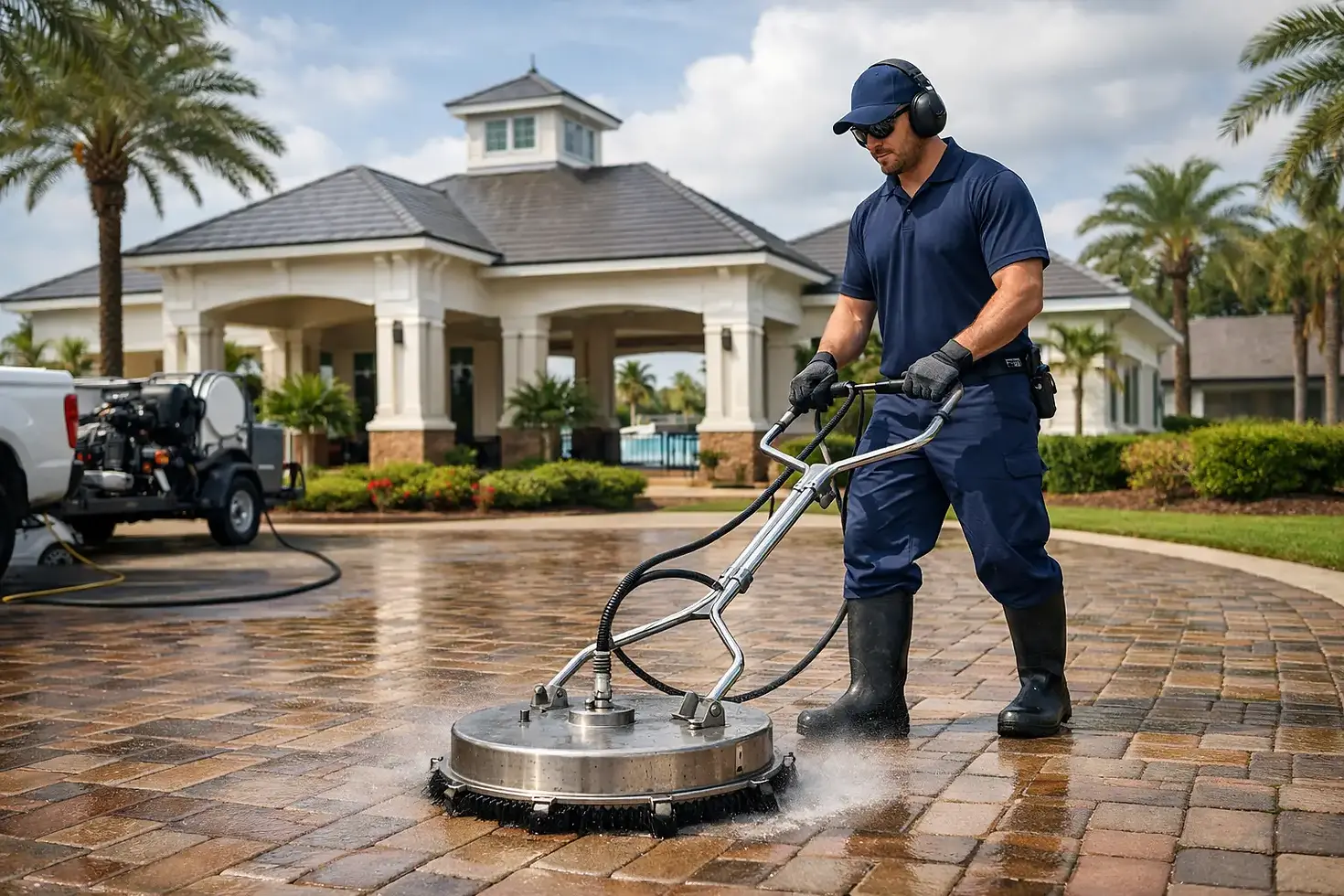
Most HOA pressure washing services focus on high-visibility and high-use common areas. These may include entry monuments, sidewalks, curbs, community signage, mail kiosks, retaining walls, concrete pads, pool decks, clubhouse exteriors, walkways, and common drive lanes.
Paver surfaces deserve special attention because dirt, organic growth, and staining can settle into textured surfaces and joints. Cleaning can restore a more uniform appearance, while a separate evaluation may determine whether paver repair or paver sealing is appropriate for the community's long-term goals.
Building exteriors require more care than hard concrete. Stucco, painted surfaces, soffits, and similar materials may call for a controlled soft-washing process rather than high-pressure cleaning. The goal is to remove organic staining effectively while respecting the condition and material of the surface.
Matching the Method to the Surface
Pressure is only one part of professional exterior cleaning. Water flow, cleaning solutions, dwell time, rinsing technique, and surface condition all matter. A capable contractor knows when a stronger cleaning method is appropriate for durable concrete and when a lower-pressure soft wash is the safer choice for more delicate exterior materials.
That distinction is critical for HOA properties, where a single project may include several surface types within a small area. The clubhouse facade, adjacent sidewalk, pool enclosure, paver patio, and entry signage should not automatically receive the same treatment. Surface-specific methods help deliver cleaner results while reducing unnecessary risk.
How Often Should an HOA Schedule Cleaning?
The right frequency depends on shade, tree cover, drainage, irrigation overspray, community traffic, and the materials throughout the property. In Florida's humid climate, many associations benefit from routine service at intervals that keep buildup manageable rather than waiting for every surface to show significant discoloration.
High-traffic locations often need attention more frequently. Entrance areas, sidewalks around amenities, mail stations, and pool decks are seen and used every day. Perimeter walls or less-traveled hardscapes may follow a different schedule. A thoughtful plan separates these priorities instead of applying the same timeline to the entire property.
Seasonal timing matters as well. Cleaning before peak use periods, community events, or property inspections can be helpful. It is also wise to account for rain patterns and access needs so crews can complete the work efficiently with minimal interruption to residents.
What HOA Boards Should Expect From a Professional Provider
Reliable communication is as important as the cleaning itself. Boards and property managers need a provider that can clearly define the scope, coordinate access, communicate schedules, and work professionally around residents, vehicles, and community operations.
Before work begins, the provider should walk the property or review the requested areas carefully. That process helps identify surface conditions, drainage concerns, sensitive areas, and sections that may require soft washing. It also allows the board to make decisions with a clear understanding of what is included.
During service, commercial-grade equipment and trained crews make a meaningful difference on larger properties. The work should be organized so common areas are cleaned thoroughly without creating unnecessary disruption. For communities that require it, flexible scheduling can help accommodate busy amenity spaces or commercial-style common areas.
Afterward, the association should have a clear record of the completed work and a practical recommendation for future maintenance. This is particularly useful for property managers overseeing multiple communities or boards planning annual maintenance budgets.
Cleaning Is the First Step, Not Always the Final One
Pressure washing restores the appearance of many hard surfaces, but it does not solve every underlying surface issue. If pavers are loose, joints are deteriorated, or a previously protected surface is no longer performing as intended, cleaning may reveal the need for additional restoration or protection.
That is where a multi-service exterior specialist can provide better continuity. After cleaning, an HOA may choose to evaluate paver repair, paver sealing, concrete sealing, or other protective treatments based on the condition of the property. Those services should be recommended only when they fit the surface, budget, and long-term maintenance plan.
For example, a heavily used paver amenity area may benefit from cleaning followed by a professional sealing plan designed for Florida exposure. A concrete walkway may simply need routine cleaning, while another section may need protection to make future maintenance more manageable. The correct answer depends on the surface and the community's goals.
Building a Practical Scope for Your Community
A well-written scope helps boards compare proposals internally, communicate with residents, and avoid missed areas. Start by identifying which common spaces are included, then group them by surface type and priority. This makes it easier to decide whether the project should cover the entire community at once or be phased by area.
Consider resident impact early. Parking access, pedestrian traffic, pool hours, gate codes, and notification requirements can shape the best service schedule. When these details are addressed before the crew arrives, the project tends to move faster and with fewer interruptions.
It also helps to think beyond the immediate clean appearance. Ask which areas repeatedly develop buildup, which surfaces receive the most traffic, and which locations influence a visitor's first impression. Those answers can guide a recurring plan that protects the community's most important shared assets.
A Local Partner for Long-Term Surface Care
HOA boards need more than a crew that arrives for a single cleaning appointment. They need a dependable exterior partner that understands Florida surfaces, documents the scope, communicates clearly, and can recommend the next right step when cleaning alone is not enough.
JET, Jacksonville Exterior Team, works with residential and commercial properties across Northeast Florida with a focus on cleaning, restoration, and long-term surface protection. For associations, that means one local team can help coordinate pressure washing, soft washing, paver restoration, sealing, and other exterior surface needs as the property evolves.
The best time to plan community cleaning is before buildup becomes the first thing residents and guests notice. A clear scope, the right method for each surface, and a reliable maintenance schedule can keep shared spaces looking cared for through every Florida season.


Comments