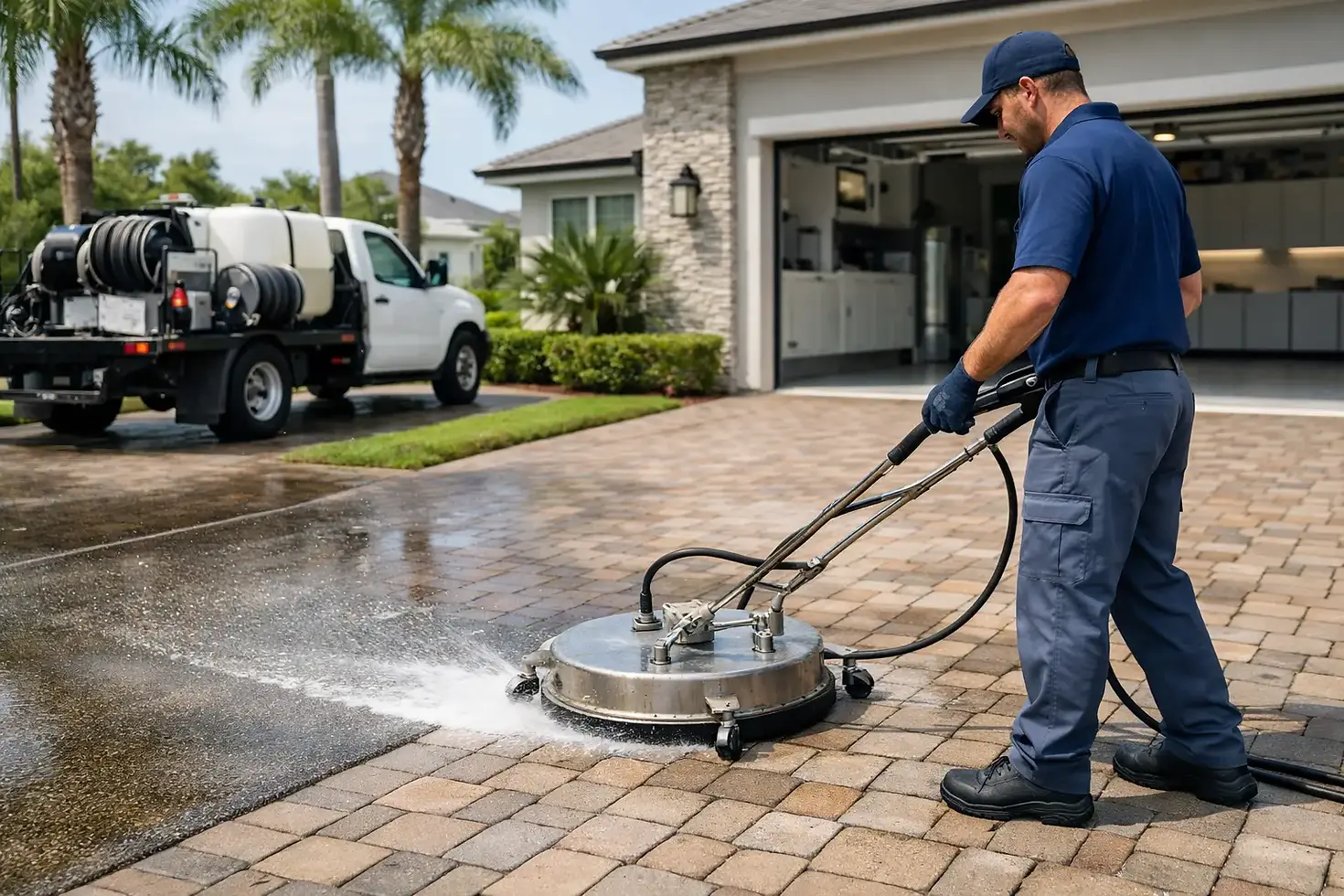
How Often Should You Pressure Wash Driveway?
- Jetty

- Jul 5
- 5 min read
That dark strip down the middle of the driveway usually starts small. Then the algae spreads, tire marks settle in, and the whole front of the property begins to look older than it is. If you are wondering how often should you pressure wash driveway surfaces, the short answer is this: most properties benefit from professional cleaning about once a year, but Florida conditions can push that timeline shorter.
A driveway takes more abuse than most exterior surfaces. It deals with rain, humidity, vehicle traffic, organic growth, rust stains, and whatever gets tracked in from the street. In Northeast Florida, where moisture and heat stay in the mix for much of the year, buildup happens faster than many property owners expect. A good schedule is not just about appearance. It is about protecting the surface, reducing slip risk, and avoiding stains that become harder to remove over time.
How often should you pressure wash driveway surfaces?
For most concrete or paver driveways, every 12 months is a solid baseline. That keeps routine grime, mildew, algae, and general discoloration from settling in too deeply. If the property has a lot of tree cover, poor drainage, heavy traffic, or constant shade, every 6 to 9 months may be a better fit.
On the other hand, a newer driveway in full sun with minimal traffic may stay in good shape longer. Some owners can stretch professional cleaning closer to 18 months if there are no visible stains, no slick areas, and no green or black organic growth. The right answer depends on how the surface is used and what it is exposed to all year.
This is where a one-size-fits-all recommendation falls short. The question is not just how often should you pressure wash driveway areas in general. It is how quickly your specific surface collects contaminants that affect appearance and performance.
Why driveways get dirty faster in Florida
Jacksonville-area properties deal with a climate that is rough on exterior surfaces. Heat, humidity, rain, and airborne debris create ideal conditions for mildew, algae, and grime. Even when a driveway does not look heavily soiled from a distance, moisture-loving growth can start building in the pores of the concrete or in the joints of pavers.
Storm season adds another layer. Rainwater carries dirt, leaves, and organic debris across the surface. Vehicles bring in oil residue, tire marks, and road grime. If the driveway sits lower than the surrounding grade or holds moisture after storms, staining and organic buildup can develop faster.
That matters because waiting too long does more than affect curb appeal. A neglected driveway can become slippery, especially in shaded spots. And once stains set deep into the surface, cleaning may require more time, more treatment, and a more careful process to restore a uniform appearance.
The signs it is time to schedule service
A calendar helps, but the surface itself usually tells you when it needs attention. If the driveway has dark patches, green growth, black streaking, rust discoloration, or noticeable tire marks, it is time to take a closer look. The same goes for surfaces that feel slick after rain or look uneven in color compared to a few months ago.
For commercial properties, frequency often needs to be tighter. Higher traffic means more dirt, more spills, and a greater need to maintain a clean, professional appearance. Retail centers, office buildings, restaurants, and HOA-managed communities often benefit from scheduled cleanings rather than waiting for visible buildup.
There is also a practical timing issue. Cleaning before buildup gets severe usually produces a better result and helps reduce long-term wear. It is easier to maintain a driveway in good condition than to bring back one that has been ignored for too long.
Surface type changes the schedule
Concrete and pavers do not always behave the same way, even on the same property. Standard concrete driveways often show tire marks, mildew, and general discoloration first. They are durable, but they are also porous, which means dirt and organic matter can settle below the surface.
Paver driveways can collect buildup in the joints and along low spots where water sits. If they have been sealed, they may resist staining better for a period of time, but they still need routine cleaning to preserve appearance and help the system perform the way it should. If they are unsealed or the sealer has worn down, they may need more frequent attention.
Age matters too. Older surfaces with minor cracking, joint wear, or uneven drainage may show problems faster than newer installations. That does not always mean they need cleaning more aggressively. It usually means they need cleaning more thoughtfully and on a schedule that makes sense for the condition of the material.
When once a year is enough and when it is not
Annual pressure washing works well for many residential driveways because it aligns with normal seasonal buildup. A yearly schedule often keeps the surface looking clean without letting organic growth get too established. For homeowners who care about curb appeal and long-term maintenance, that is a reliable starting point.
But some properties simply do not stay clean that long. If your driveway is shaded for most of the day, sits under oak trees, or stays damp after rain, annual service may not be enough. In those cases, a 6-month cycle can help prevent visible staining and reduce slick spots before they become a safety issue.
There are also situations where timing should be tied to use. A home that is going on the market, a commercial site preparing for inspections, or a property getting additional exterior services may benefit from cleaning sooner, even if the last visit was fairly recent. Maintenance is not just about the date. It is about the condition and the standard you want to maintain.
Professional cleaning protects more than appearance
Most people first notice a dirty driveway because it looks bad. That is fair. The driveway is one of the first things guests, customers, and neighbors see. But the bigger value is in what routine cleaning helps prevent.
Organic growth can make walking surfaces slick. Oil, rust, and tannin stains can become more stubborn with time. Buildup left in place can shorten the clean, uniform look of concrete and pavers, especially in a climate where moisture does not take long to feed new growth.
Professional pressure washing is also part of a bigger maintenance strategy. If a surface is going to be sealed, evaluated for wear, or maintained as part of a larger exterior care plan, it needs to be properly cleaned first. Property owners who think beyond the immediate cosmetic fix usually get better long-term results.
A better way to think about driveway cleaning frequency
Instead of asking only how often should you pressure wash driveway surfaces, it helps to ask what conditions your driveway faces every week. Is it shaded? Does it stay wet? Is there heavy traffic? Are there frequent stains from vehicles or nearby landscaping beds? Does the front of the property need to stay sharp year-round?
Those factors matter more than a generic recommendation from a national article written for every climate at once. In Northeast Florida, exterior surfaces work harder. They need a maintenance schedule built around local weather, daily use, and the material itself.
For many homeowners, that means service every 12 months, with some properties needing attention every 6 to 9 months. For commercial sites, a recurring plan may make more sense depending on traffic and presentation standards. The best schedule is the one that keeps the driveway clean, safe, and protected without waiting for visible deterioration to force the issue.
If your driveway already looks darker than it should, feels slick after rain, or has stains that keep drawing your eye every time you pull in, that is usually the right time to act. A clean surface does more than improve first impressions. It helps the whole property look cared for, and that is something people notice right away.


Comments