Driveway Sealing in Jacksonville That Lasts
- Jetty

- 11 minutes ago
- 5 min read
A Jacksonville driveway takes a beating in ways that are easy to overlook. Summer heat bakes the surface, afternoon rain pushes moisture into porous material, vehicles leave tire marks and fluid spots, and shaded areas can develop stubborn organic growth. Driveway sealing in Jacksonville is not simply about making a surface look fresh for a few weeks. Done correctly, it is a protection plan built around the way Northeast Florida weather wears on concrete and pavers.
The difference is preparation. A sealer can enhance color, help resist stains, and make future cleaning more manageable, but it cannot perform well over embedded dirt, active organic growth, loose joint sand, or trapped moisture. Property owners who want lasting results should look at the full condition of the driveway before selecting a finish or scheduling service.
What Driveway Sealing Actually Protects
Concrete and pavers are both durable, but neither is completely closed to moisture and contaminants. Their pores can absorb water, vehicle fluids, tannin stains, and other materials that change the appearance of the surface over time. Florida's cycle of heat, heavy rain, humidity, and strong UV exposure speeds up that wear.
A professionally selected sealer creates a protective barrier suited to the surface. On concrete, that may mean reducing absorption and helping the driveway resist staining and weather-related discoloration. On pavers, sealing can help enrich the surface appearance, protect color, stabilize properly prepared joint sand, and reduce the conditions that allow dirt and moisture to settle in.
The goal is not to make a driveway maintenance-free. No exterior surface is. The goal is to give the surface a stronger first line of defense, preserve a cleaner appearance, and help protect the investment already sitting in front of the home or business.
Why Jacksonville Conditions Change the Job
A driveway that performs well in a mild, dry climate may need a different approach in Jacksonville. Humidity matters because moisture can remain in concrete and pavers long after a rainstorm. Heat matters because it affects how materials cure and how quickly surfaces weather. Shade, drainage patterns, tree cover, traffic volume, and proximity to the coast can all affect what a driveway needs.
That is why timing is part of professional driveway sealing in Jacksonville. The surface needs appropriate dry conditions before sealing, and the weather forecast has to support proper curing afterward. Moving too quickly after cleaning or sealing during an unsuitable weather window can compromise adhesion, appearance, or durability.
Surface temperature also deserves attention. A driveway exposed to direct sun can become significantly hotter than the air temperature. Professional crews plan material selection and application around real site conditions rather than treating every driveway as the same job.
The Work Happens Before the Sealer Goes On
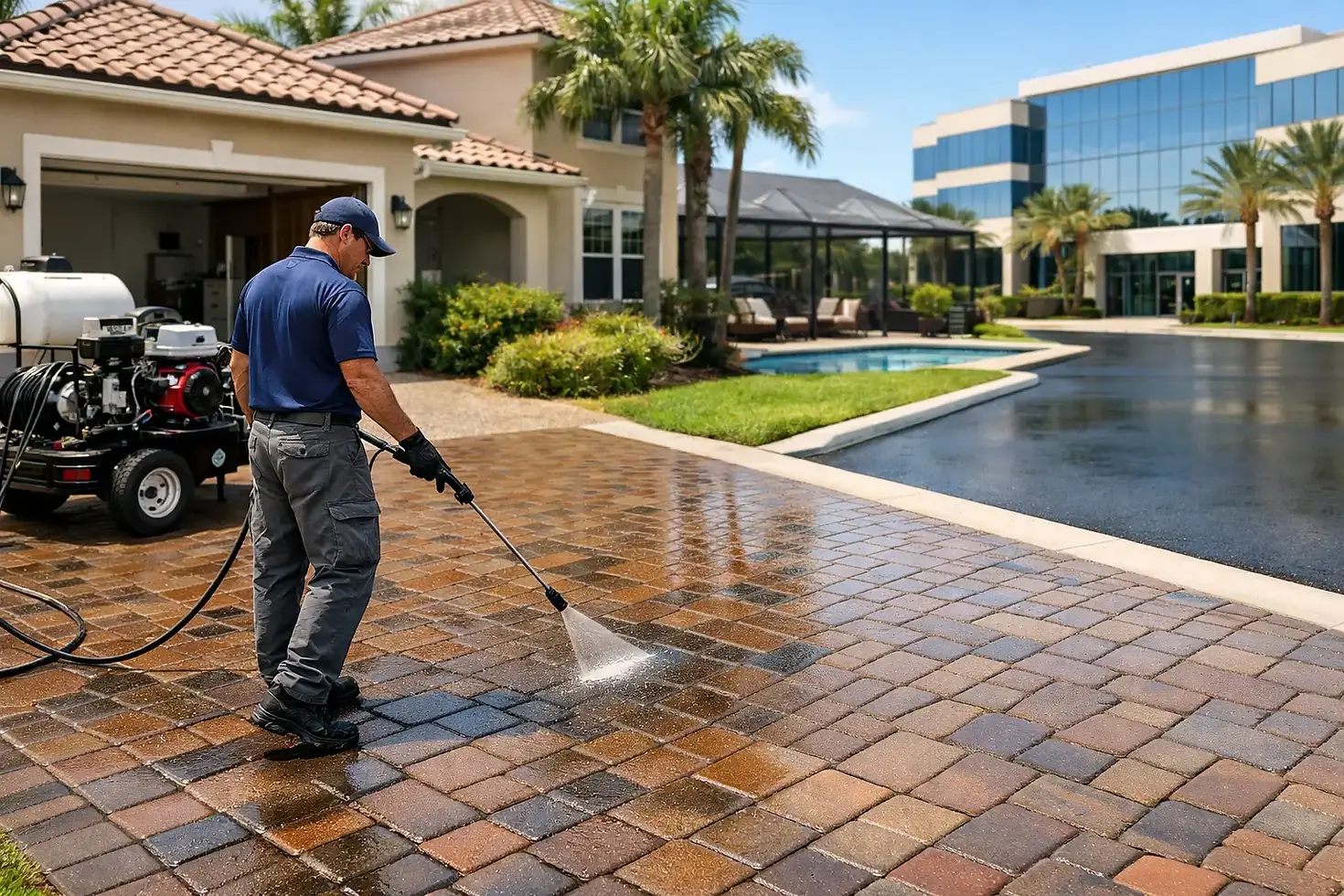
The finished appearance is only as good as the preparation underneath it. A driveway should be evaluated for staining, organic growth, surface wear, drainage concerns, joint loss on pavers, and areas where previous coatings or sealers may be failing. This evaluation helps determine whether the surface is ready for protection and what steps are needed first.
Professional cleaning removes the buildup that a sealer should not lock in. For paver driveways, preparation may also include restoring joint sand where needed so the individual units are properly supported before sealing. For concrete, attention is given to deep staining, surface porosity, and whether moisture conditions are appropriate for the selected system.
A proper process typically includes thorough cleaning, targeted treatment for organic staining, a complete drying period, detailed surface inspection, and controlled sealer application. These steps are not filler. They are what separate durable protection from a finish that looks uneven or fades prematurely.
Concrete and Paver Driveways Need Different Decisions
The word driveway covers a wide range of surfaces. A concrete driveway often calls for a penetrating or protective treatment designed around porosity, stain resistance, and the desired finish. Some homeowners prefer a natural, low-sheen look, while others want more visible color enhancement. The right choice depends on the condition of the concrete and the level of visual change the owner wants.
Paver driveways bring another set of considerations. The pavers themselves may be faded, the joints may have lost material, and the surface can hold dirt and moisture between units. A paver sealing system should account for both the face of the paver and the joint structure. The result can be a more defined, more consistent appearance, but only when the surface has been cleaned, dried, and prepared correctly.
There are trade-offs with finish level. A richer wet-look appearance can make paver color stand out, while a more natural finish may better suit a subtle exterior design. Higher sheen is not automatically better, especially in areas where glare or slip resistance is a concern. The best recommendation is based on the driveway's material, exposure, traffic, and the owner's expectations for appearance and upkeep.
Signs Your Driveway Is Ready for Sealing
A driveway does not need to be severely worn before it benefits from protection. In fact, sealing is often most valuable when the surface is still in good shape and the goal is to preserve it. Fading color, recurring dark spots, visible absorption after rain, tire marks that linger, and paver joints that appear depleted are all reasons to schedule an evaluation.
It is also smart to consider sealing after a professional restoration cleaning. Once years of buildup are removed, the true condition of the concrete or pavers becomes visible. Sealing at that point helps protect the cleaner, renewed surface rather than waiting for stains and weathering to return.
For commercial properties, driveway and entry surfaces affect more than curb appeal. They shape the first impression for customers, tenants, and visitors. Property managers also need work planned around access, safety, and operating hours. A professional provider can assess the site and coordinate the project with minimal disruption.
How Long Does Driveway Sealing Last?
There is no honest one-size-fits-all answer. Longevity depends on the material, sealer type, amount of sun, drainage, traffic, cleaning history, and the condition of the surface at the time of application. A driveway used by multiple vehicles every day will wear differently than a lightly used residential drive. A shaded driveway with recurring moisture exposure has different maintenance needs than one in open sun.
Instead of focusing only on a calendar estimate, watch the surface. Water that quickly darkens and absorbs into the material, fading color, loss of finish consistency, and increasing stain retention can signal that the protective layer needs attention. Regular professional maintenance helps property owners address those changes before the driveway looks neglected.
Choose Protection, Not a Temporary Cosmetic Fix
Driveway sealing should begin with an inspection, not a generic promise. The right service provider will explain what the surface needs, identify conditions that may affect the result, recommend a finish that fits the property, and communicate how long access will be restricted while the system cures.
At JET - Jacksonville Exterior Team, the focus is on surface preparation, Florida-appropriate protection, and clear recommendations for concrete and paver driveways. That approach matters because a clean, properly sealed driveway can support the appearance of the entire property while standing up better to the conditions that Jacksonville delivers year after year.
If your driveway is starting to look faded, stained, or harder to keep clean, an on-site assessment can provide a practical next step. Protecting the surface while it is still serviceable is often the best way to keep a small exterior concern from becoming a more noticeable one.


Comments